

Saltwater, Sand & Sun: Summer Beach Safety for Kailua Dogs
Made for the Beach
In Kailua, the beach isn’t just a place to play — it’s part of how our ohana spends time together. And few things make a dog happier than sand between their toes and surf to splash through. Before you load up the car, Dr. Sara shares her top dog beach safety tips to keep your pup safe, comfortable, and ready for many more beach days to come.
Saltwater: Keep the Fresh Water Flowing
It’s natural for dogs to bite at the waves while they play, but saltwater and the sand that comes with it can cause stomach upset, including vomiting and diarrhea. Prevention is simple: bring plenty of fresh, cool water and offer it often, so your dog reaches for the good stuff instead of the surf.
- Pack more fresh water than you think you’ll need
- Offer it regularly throughout your visit, not just at the end
- Rinse salt, sand, and debris from the coat and paws before heading home
- Call your vet if vomiting and diarrhea occur
Sand: Watch What Washes Up
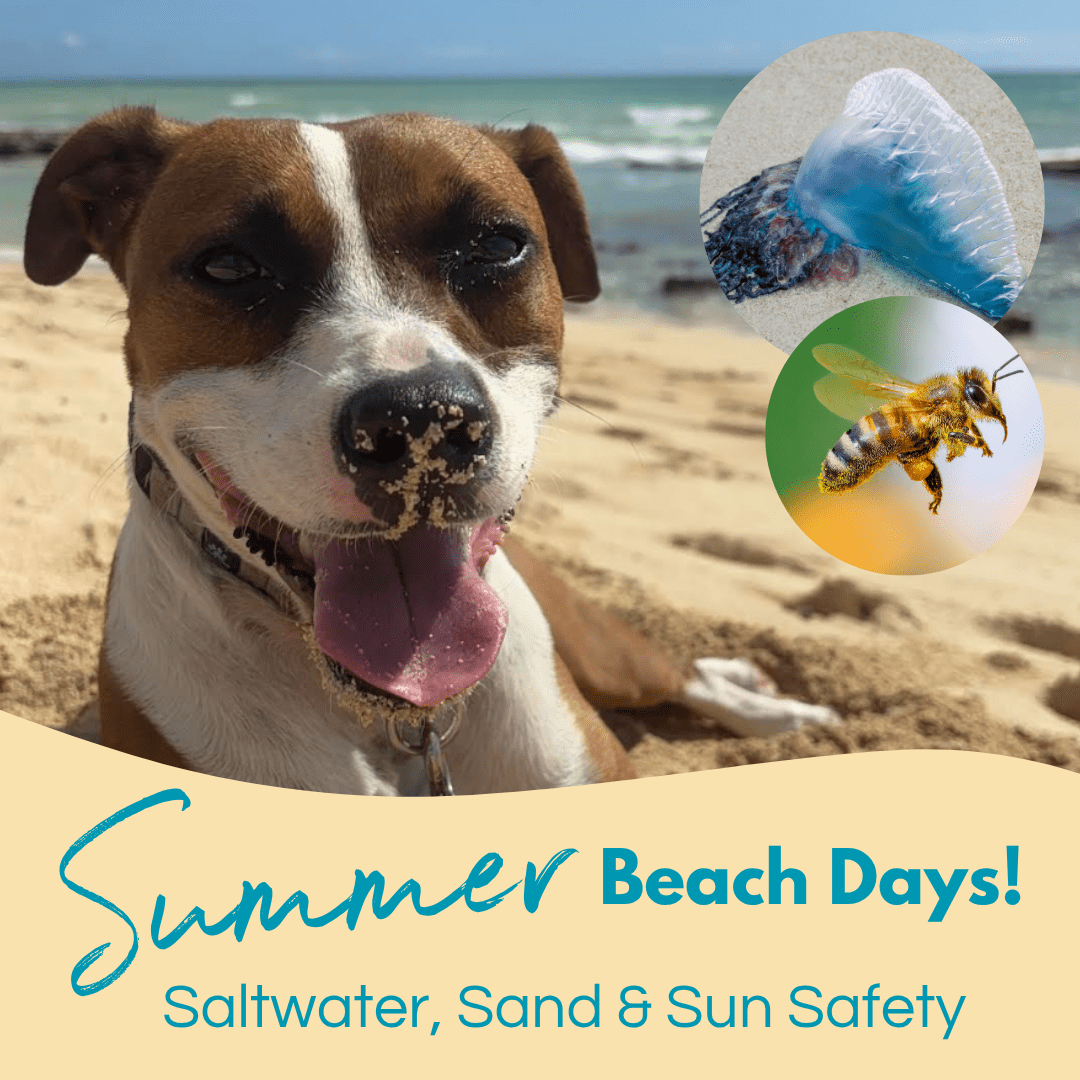
The same trade winds that cool us off can blow stinging visitors onto the sand. Be cautious when you see your pup’s curious nose heading for unknown objects on the sand. Coin sized Portuguese man o’ wars, which look like clear plastic with a streak of blue inside, are known to drift ashore. The tentacles will cause a painful sting if your pup comes in contact. Bees can also appear along the shoreline, and near beach foliage. If you suspect a sting and notice swelling, particularly around the face, it is time to head to the vet. Lastly, if your dog loves to dig and rummage at the beach, ensure they’re not eating mouthfuls of sand, which can cause a serious intestinal blockage.
- Steer clear of unknown objects on the shoreline, particularly jellyfish-like creatures
- Watch for bees, especially near beach foliage
- Call us right away if your dog is stung, seems distressed, or if you notice swelling
- Discourage digging and eating to prevent sand ingestion
Sun: Sensitive Skin Needs Protection
It surprises many pet parents, but dogs can get sunburned, too. Dogs with light pigmentation, pink skin, or thin coats are especially sensitive, and noses, ears, and bellies are common trouble spots. A little shade and protection go a long way under our island sun.
- Apply a dog-safe sunscreen to exposed skin (never the kind made for people)
- Try an SPF protective shirt for thin-coated or light-skinned pups
- Bring a sunshade or pop-up tent so there’s always a spot out of direct sun
- Aim for early morning or late afternoon, when the sun is gentler
Beat the Heat
To cool themselves, dogs rely on panting, which becomes ineffective when exposed to hot temperatures for long periods. Heatstroke is a serious emergency that requires swift veterinary care! Knowing the signs and preventing overheating is key. Hot sand can also be a hazard, burning sensitive paw pads. A good rule of thumb: if the sand is too hot for your feet, it’s too hot for their paws.
- Provide constant access to shade and fresh water
- Take frequent breaks, and avoid beach time mid-day when the heat is most intense
- Test the sand with your hands or feet before letting your dog walk on it
- Know the signs of overheating: bright red gums, heavy panting, drooling, lethargy, or stumbling
- Seek a cool area and call your vet ASAP if suspect heatstroke — it can escalate fast
With a little planning, the beach stays one of the best parts of summer for your whole ohana. Have questions before your next adventure? We’re always here to help your animal family member enjoy the season safely!